You won’t get a “drumline” from a modern metal roof in the rain if it’s built on solid decking with the right underlayment, air-sealing, and attic insulation. The assembly under the panels damps vibration and blocks airborne sound, so panel type matters less than install quality. Exposed-fastener systems can add more tick and ping, but tight fasteners and sealed details keep noise low. Keep going to see what build-ups stay quiet.
Are Metal Roofs Loud in the Rain?
How loud is a metal roof in the rain? You’ll usually hear a soft, even patter, not a drumline, when the system is built correctly. Noise comes from panel vibration and air gaps, so you control it with solid roof decking, underlayment, and insulated attic assemblies. Manufacturers validate this through sound testing that measures decibel levels across frequencies, letting you compare assemblies, not guesses. If you’re specifying an innovative build, choose mechanically fastened or standing-seam profiles designed to limit resonance, and ensure proper clip spacing and seal details. You also won’t sacrifice aesthetic impact: modern coatings and sleek profiles keep the roof’s look premium while the acoustic performance stays predictable in real storms.
Metal Roof Rain Noise vs. Asphalt Shingles
When you compare rain noise on a metal roof versus asphalt shingles, the real driver isn’t the material label-it’s the whole assembly’s ability to damp vibration and block airborne sound. If you spec solid decking, high-density underlayment, and a continuous air-seal, metal can sound as quiet as shingles, even in heavy downpours. Shingles add inherent mass and granular texture, so a bare-bones shingle system may mask impact noise slightly better than thin metal over open framing. But modern metal panels paired with acoustic underlayments and insulated attic planes can outperform expectations while boosting material durability. In a cost comparison, metal may cost more upfront, yet you can offset it with longer service life and fewer tear-offs during upgrades.
Why the “Noisy Metal Roof” Myth Persists
You’ve probably tied “metal roof noise” to old barn roofs where bare panels sat over open framing and amplified rain impact. You can also mistake loud, uninsulated or poorly detailed installations for standard residential systems that use sheathing, underlayment, and attic insulation to damp sound. Then media clips and word-of-mouth keep repeating the worst-case examples until they feel like the norm.
Lingering Barn Roof Memories
Why does the “metal roofs are loud” idea stick around so stubbornly? You’ve probably got a nostalgia vignette tucked away: rain hammering a corrugated barn roof while you stood in a loft or aisle. Those memories feel like data, but they’re really a snapshot of barn acoustics-big, open volumes, hard surfaces, and long reverberation times that amplify impact noise and make it linger.
When you picture that sound, you unconsciously map it onto today’s sleek standing-seam panels and engineered assemblies. Your brain favors the familiar narrative over the updated physics. So the myth persists, not because metal inherently “rings,” but because your reference point was an echo-prone structure designed for storage, not comfort. Modern design starts by modeling sound paths and controlling reflections at the source.
Confusing Uninsulated Installations
Barn acoustics plant the “metal equals loud” idea, but uninsulated installs keep it alive in real life. When you fasten metal panels directly to purlins with open air below, you create a drum skin. Rain impact excites the sheet, and the cavity amplifies mid- and high-frequency components. You’ll hear it most in sheds, porches, and older retrofits where there’s no roof deck, no underlayment, and no thermal-acoustic layer to damp vibration.
If you compare that setup to a modern assembly-solid sheathing, high-temp underlayment, sealed seams, and continuous insulation-you’re not testing the same system. Treating both as identical is an unrelated topic dressed up as a random concept of “metal roofs.”
Media And Word-Of-Mouth
How does the “metal roofs are loud” idea persist even when modern assemblies are tested for quiet? You’re hearing an echo chamber: old barn-roof memories, plus Urban legends repeated as “common sense.” A single viral clip of rain on bare corrugated panels gets framed as typical, even though it’s an uninsulated, open-deck setup.
Word-of-mouth amplifies that mismatch. When a neighbor says, “Metal is noisy,” you tend to generalize across profiles, underlayments, and decks. Then social media reinforces it with short, decontextualized comparisons that ignore STC-rated assemblies, attic insulation, and resilient underlayments. If you want innovation, treat sound like any performance spec: ask for tested roof build-ups, fastener details, and documented acoustic results.
What Actually Controls Rain Noise on Metal Roofs
Rain noise on a metal roof isn’t mainly about the panel-it’s about the assembly you build under it. When you install solid roof decking with the right underlayment, you damp vibration and cut the “drum” effect. Add adequate insulation and manage attic air space, and you’ll reduce sound transmission into the rooms below.
Roof Decking And Underlayment
Noise control starts with the layers beneath the panels: your roof decking and underlayment determine whether raindrops become a dull thud or a sharp ping inside the house. You can ignore most soundproofing myths that blame metal alone; the real variable is how tightly the system couples to the structure and how well it damps vibration.
Choose decking materials that add mass and stiffness-properly fastened plywood or OSB over solid framing reduces panel flex and resonance. Then specify a high-performance underlayment: synthetic sheets for consistent coverage, or peel-and-stick membranes to add damping and seal nail penetrations. Install it flat, overlapped, and sealed at seams so you don’t create air gaps that act like tiny drums. Done right, rain noise stays controlled and predictable.
Insulation And Attic Space
Where the sound ends up in your living space depends less on the metal panels and more on what’s between them and you-namely, insulation and the attic air volume. A thick, continuous thermal-acoustic layer turns impact vibration into low-level heat, while a vented attic acts like a buffer chamber that breaks up pressure pulses. When you pair smart assemblies with innovative coatings, you get durability without trading comfort for performance.
- Depth matters: higher R-value batts or spray foam reduce airborne noise transmission.
- Continuity wins: seal gaps at top plates, can lights, and ducts so sound can’t flank.
- Air volume helps: more attic height generally lowers perceived “drum” effects.
- Secure fastening: resist wind uplift so panels don’t chatter, preserving quiet.
Does Solid Decking Make a Metal Roof Quieter?
How much solid decking actually quiets a metal roof depends on the entire roof assembly, but it generally helps by providing the panels with a rigid, continuous backing that limits vibration and “drum” effects. When you fasten metal to solid sheathing instead of widely spaced purlins, you shorten the panel’s free span, so impact energy dissipates faster and you get measurable noise reduction. Smart deck construction choices matter: thicker plywood/OSB, tighter fastener spacing, and properly supported seams prevent micro-movement that amplifies sound. You’ll also want a high-quality underlayment to decouple the panel from the deck and damp resonance without adding bulk. If you’re upgrading an older roof, adding solid decking can modernize performance and improve wind uplift resistance while making rain sound less sharp.
How Insulation and Attic Space Reduce Rain Sound
Even if raindrops ping the panels, insulation and attic air volume keep most of that impact energy from reaching your living space. You’re relying on damping and decoupling: fibers convert vibration to heat, and the attic cavity breaks the sound path before it hits drywall.
- Optimize insulation placement: fill joist bays evenly and seal gaps to prevent “sound leaks.”
- Add resilient layers: dense batts or blown-in cellulose raise absorption across mid/high frequencies.
- Preserve attic depth: more air volume increases acoustic attenuation and reduces drum-like resonance.
- Maintain smart attic ventilation: balanced intake/exhaust prevents moisture that can compress insulation and reduce performance.
With a well-tuned assembly, you’ll hear rain as a soft ambience, not a disruptive rattle indoors.
Standing Seam vs. Exposed Fastener: Which Is Louder?
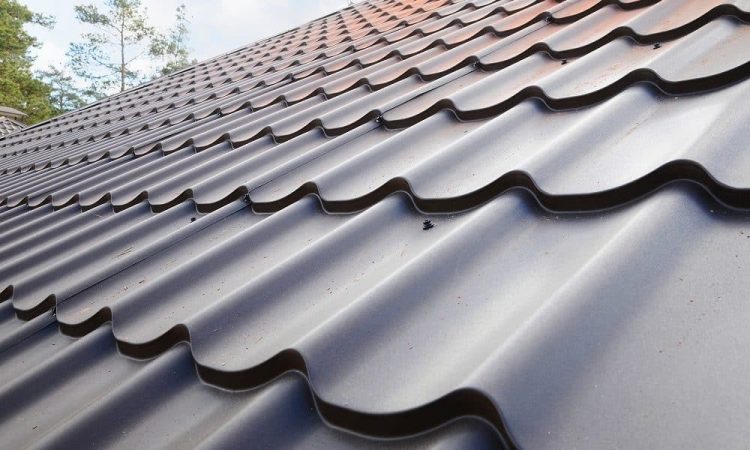
In practice, which metal roof profile sounds louder in a storm-standing seam or exposed fastener? In most homes, you won’t hear a dramatic difference if the deck is solid and the assembly stays tight. Exposed-fastener panels can telegraph more “tick” and “ping” because screws and washers create many point contacts, and slight movement can add sharp, high-frequency impulses. Standing seam clips and concealed fasteners tend to distribute loads more evenly, so impacts read as a smoother, lower-frequency drum. Still, your insulation strategy and ventilation placement drive what reaches your living space. If you control panel oil-canning, maintain fastener torque, and avoid loose flashings, either system can stay acoustically civilized without overbuilding. Choose based on performance, service life, and detailing speed.
What Underlayment Makes Metal Roofs Quieter?
Where does the “rain noise” actually get stopped on a metal roof-at the underlayment. You’re not relying on the panel alone; you’re building a layered acoustic system that breaks vibration paths and absorbs impact energy. Choose underlayment options based on mass, decoupling, and moisture control, so you get measurable sound damping without compromising performance.
- Synthetic underlayment: stable, tear-resistant, but moderate acoustic benefit.
- Peel-and-stick ice/water membrane: adds mass and seals the deck, boosting damping.
- Butyl-backed acoustic membrane: engineered viscoelastic layer for high damping.
- High-density underlayment + thin insulation board: decouples the metal, reducing resonance.
Match the product to your deck type and fastener layout for the quietest result.
When Metal Roof Rain Noise Is a Real Problem
Underlayment does most of the acoustic heavy lifting, but rain noise can still become a real issue when the roof system lets the metal panels vibrate like a drum. You’ll hear it most in open-span rooms, vaulted ceilings, or retrofits where you’ve got minimal attic insulation and no air gap to decouple the deck.
Noise dynamics spike when fasteners back out, clips aren’t spec’d for thermal movement, or panels oil-can and slap during heavy wind-driven rain. Thin gauge panels, wide purlin spacing, and missing closure strips also create resonant cavities. If you’re weathering misconceptions and chasing a quieter build, prioritize solid decking, tighter attachment patterns, acoustic-rated underlayment, and targeted spray foam at problem bays-not full coverage.
Frequently Asked Questions
Will a Metal Roof Amplify Hail Noise More Than Rain?
Yes, a metal roof can amplify hail noise more than rain because hail impacts deliver sharper, higher-energy impulses than raindrops. You’ll notice louder “pinging” with larger hailstones, but modern assemblies keep it controlled. Specify solid decking, high-R underlayment, and above-deck insulation, and you’ll substantially reduce sound transmission. Choose thicker-gauge panels, concealed-fastener systems, and proper attic air sealing. You’ll get durability and comfort without excessive noise.
Do Metal Roofs Get Noisier as They Age and Fasteners Loosen?
They don’t usually get noisier with age, but loose fasteners can turn your roof into a rattling compass needle. You’ll hear more vibration only if the panels shift, the washers harden, or the underlayment degrades. Inspect fasteners, replace failed neoprene washers, and retighten to spec; you’ll restore damping. Don’t let old myths distract you: modern roof materials and clip systems keep movement controlled, even through thermal cycling and storms.
How Does Roof Pitch Affect Perceived Rain Noise Indoors?
A steeper roof pitch typically reduces perceived indoor sound because raindrops hit at a glancing angle, shedding water faster and reducing impact energy. A low-slope roof pitch invites more direct hits, longer water dwell time, and broader vibration paths into the deck, so you’ll hear more. You can counter this with high-density underlayment, decoupled insulation, and sealed air gaps, keeping performance quiet without compromising modern, lightweight metal systems.
Are Metal Roofs Louder in Mobile Homes or Cabins Without Attics?
Yes, metal roofs can sound louder in mobile homes or cabins without attics-like a drumbeat in a tight box-because you’ve got less air space to buffer impact noise. You’ll tame it with insulated panels, dense roof-deck underlayment, resilient channels, and sealed cavities. You should also address moisture intrusion by specifying vapor control, taped seams, and venting so upgrades don’t trap humidity and amplify sound later.
Do Solar Panels on Metal Roofs Reduce or Increase Rain Noise?
Solar panels on metal roofs usually reduce rain noise, though poorly mounted systems can increase vibration. For a practical noise comparison, the panel array acts as a mass-damping layer, creating an air gap that breaks direct impact sound, lowering interior SPL. The solar impact depends on racking stiffness, fastener torque, and isolators: use rubber-backed clamps, keep rails tight, and avoid loose conduits. You’ll get quieter performance.
Conclusion
If you’re picturing a metal roof turning every drizzle into a stadium drum solo, you can relax. With solid decking, quality underlayment, and proper insulation, rain noise drops to a controlled, dull tap-often comparable to shingles. You control the acoustics: attic air volume, insulation R-value, fastener type, and panel profile all matter. Standing seam over a well-built deck stays especially quiet. Only thin, uninsulated buildings make rain sound extreme.