EV Charger, Pool, Home Office and New Appliances? When Austin, Texas Homeowners Have Outgrown Their Electrical Panel

There is a point when an Austin, Texas home simply starts asking more from its electrical system than it was originally designed to provide.
Maybe the house started out with a fairly simple electrical setup. A refrigerator, electric range, lighting, a few televisions, an HVAC system, and the usual assortment of household appliances were all the home needed. Years later, things can look very different.
Now there may be an electric vehicle charging in the garage, a pool pump running outside, a new electric dryer, an upgraded HVAC system, a home office filled with computers and monitors, and a workshop in the garage or detached structure. Perhaps a standby generator or portable generator interlock has been added for backup power, too.
None of these improvements is necessarily a problem by itself. The bigger issue is what happens when several major electrical demands are added to the same system over time.
That’s when Austin homeowners may discover that their electrical panel has become the limiting factor.
Homeowners in Austin, Texas can work with a licensed residential electrician from Tejas Electric for a professional electrical panel upgrade when their home’s electrical demands have grown beyond what the existing equipment can safely and practically support.
Your Electrical Panel May Not Be Keeping Up With Your Home
One of the easiest ways to overlook an overloaded electrical system is to think about each project separately.
An EV charger might have been installed last year. The pool equipment may have been added several years ago. The homeowner may have recently replaced an aging gas range with an electric model. A home office may have gradually expanded from one computer to multiple monitors, printers, networking equipment, and other electronics.
Looking at each project individually can make the electrical system seem perfectly adequate.
But your electrical system doesn’t experience those upgrades individually.
It has to handle their combined demand.
That’s particularly important in a modern Austin home because several high-demand systems can operate at the same time. Air conditioning may be running on a hot afternoon while the pool pump is operating, an EV is charging, someone is using the electric dryer, and another family member is working from home.
The question isn’t simply whether the home has enough circuits.
The question is whether the electrical service and panel are appropriately sized for the home’s overall electrical load.
EV Chargers Can Add Significant Electrical Demand
Electric vehicles have become a common consideration for homeowners planning electrical improvements.
An EV charger installed at a home can be convenient, but charging equipment can also represent a substantial electrical load. Unlike plugging in a small household device, an EV charger may draw considerable power for an extended period.
That matters when an existing electrical panel is already supporting numerous large loads.
For example, a homeowner might have an older panel with limited service capacity and decide to install an EV charger. The charger itself may be installable from a circuit-space standpoint, but that doesn’t automatically mean the home’s electrical service has adequate capacity for the additional load.
This is one reason an electrician should evaluate the existing system before an EV charger installation rather than simply looking for an empty breaker position.
Pool Pumps and Equipment Add Another Continuous Load
Pools are a popular feature around Austin, but pool equipment creates electrical demands that need to be considered as part of the home’s overall system.
Pool pumps, heaters, lighting, automation equipment, and other components can all contribute to the electrical load.
A pool project may also occur at the same time as other home improvements. If a homeowner is simultaneously adding an EV charger, outdoor kitchen, electric appliances, or upgraded HVAC equipment, the cumulative effect becomes much more important.
The pool equipment might work perfectly. The EV charger might work perfectly. The HVAC system might work perfectly.
The issue can still be whether the home’s electrical infrastructure was designed to support everything together.
Electric Ranges and Dryers Can Change the Load Profile
Switching from gas appliances to electric appliances can be a great choice for a homeowner, but it also changes how much electricity the house needs.
Electric ranges and clothes dryers are among the larger electrical loads found in many homes.
A kitchen renovation, for example, may involve replacing a gas range with an electric range or induction cooktop. A laundry-room renovation may include a new electric dryer. Those changes can be easy to overlook when the project is primarily viewed as a remodeling job.
If the electrical panel is already near its practical capacity, adding large appliances can become another reason to evaluate the entire electrical system.
HVAC Systems and Heat Pumps Deserve Special Attention
Austin’s climate puts a substantial demand on residential heating and cooling equipment.
Air conditioning can already represent one of the larger electrical loads in a home. Modernizing an HVAC system or installing a heat pump can further change the home’s electrical requirements depending on the equipment selected.
This becomes particularly important during renovations or additions.
A homeowner might be upgrading the HVAC system at the same time as installing an EV charger or remodeling the kitchen. Rather than treating those projects as unrelated electrical jobs, it makes sense to look at the entire system.
An electrician can consider the existing service, panel, major circuits, and anticipated loads before determining whether the current setup is adequate.
A Home Office Can Be More Than Just a Laptop
A home office doesn’t necessarily require a panel upgrade.
But today’s home offices can involve considerably more equipment than they once did.
Think about multiple high-resolution monitors, desktop computers, printers, networking equipment, large displays, audio equipment, servers, battery backups, and other electronics. Add several people working from home, and electrical demand can increase further.
There is also a practical concern: homeowners sometimes solve an insufficient number of receptacles by relying heavily on power strips and extension cords.
That doesn’t increase the electrical capacity of the home.
If you’re converting part of your house, garage, or addition into a serious workspace, an electrician can help determine whether additional dedicated circuits or broader electrical improvements make sense.
Workshops and Detached Structures Can Push the System Further
A workshop can introduce an entirely different category of electrical demand.
Power tools, compressors, welders, dust collection systems, saws, lighting, battery chargers, and other equipment can create significant loads. The same is true for detached garages, studios, casitas, guest houses, and other structures.
If electricity needs to be extended to a detached structure, the project may involve more than simply running a new circuit.
The electrician may need to consider the feeder, panel configuration, voltage drop, grounding and bonding requirements, available capacity, and the loads expected at the detached structure.
Planning for these needs before construction can prevent homeowners from having to retrofit the electrical system later.
Backup Generators Are Part of the Conversation, Too
Generator planning is another area where homeowners should think beyond the immediate installation.
A standby generator can provide backup power to selected loads or, depending on the system, a much larger portion of the home. Portable generators can also be connected through properly installed equipment such as an appropriate inlet and interlock arrangement.
But backup power equipment has to be coordinated with the home’s electrical system.
The generator, transfer equipment or interlock, panel, selected circuits, and intended loads all need to work together properly.
For example, a homeowner may want backup power for refrigeration, HVAC, lighting, internet equipment, a home office, or other essential circuits. Understanding the available electrical capacity and deciding which loads should be supported is part of responsible generator planning.
An Empty Breaker Space Doesn’t Mean You Have Extra Capacity
This is one of the most important distinctions homeowners should understand.
Breaker space and electrical capacity are not the same thing.
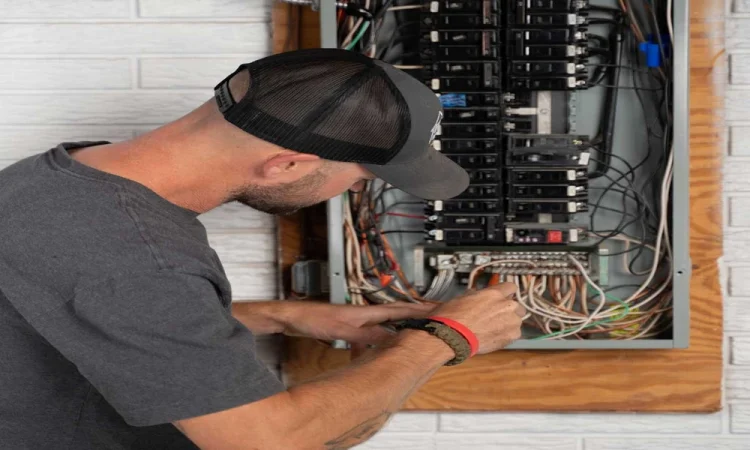
An electrical panel can have an open breaker position and still have limited capacity for additional loads.
Think of the breaker spaces as parking spots and the electrical service as the road supplying the parking lot. Having an empty parking spot doesn’t necessarily mean the road can handle unlimited additional traffic.
The same principle applies to an electrical panel.
A homeowner might look at the panel and see several unused spaces and assume, “There’s plenty of room.”
An electrician has to look deeper.
The size of the electrical service, service conductors, panel rating, existing loads, major appliances, feeder arrangements, and calculated demand all matter.
That’s why simply installing another breaker isn’t necessarily the right answer.
How an Electrician Evaluates the Electrical Load
Before recommending a panel upgrade, a licensed electrician can perform a load evaluation to understand how the home’s electrical system is being used and what additional demand is expected.
The evaluation can involve reviewing the existing electrical service and panel, identifying major electrical loads, looking at existing circuits and equipment, and considering planned improvements.
The electrician may also need to account for equipment such as:
- EV charging equipment
- Air conditioners and heat pumps
- Electric ranges and ovens
- Electric clothes dryers
- Pool pumps and equipment
- Water heaters
- Workshops and power tools
- Detached structures
- Home offices and technology equipment
- Generator equipment
- Other significant electrical loads
The purpose isn’t simply to find an excuse to replace a panel.
A proper evaluation helps determine whether a panel upgrade is actually warranted and what type of electrical improvement is appropriate.
Sometimes the answer may be that the existing system can handle the planned project.
Other times, the evaluation may reveal that upgrading the electrical service or panel is the more practical long-term solution.
Should a Handy Homeowner Do This as a DIY Project?
There is a big difference between changing a light fixture and modifying a home’s main electrical service or panel.
Some homeowners are extremely capable with tools and have experience completing projects around their properties. That doesn’t mean panel work should automatically become a DIY project.
Electrical panel upgrades can involve service equipment, high fault-current levels, grounding and bonding, utility coordination, permitting requirements, and other safety considerations. Mistakes can have serious consequences.
A panel upgrade isn’t simply a matter of removing an old box and installing a larger one.
The work should be evaluated and performed in accordance with applicable electrical requirements, local requirements, and the equipment manufacturer’s specifications.
For Austin, Texas homeowners, having a Texas-licensed electrician involved provides an important layer of professional knowledge and accountability. Tejas Electric works with homeowners who need electrical improvements as their properties evolve, including panel upgrades and other major residential electrical projects.
A handy homeowner can certainly participate in planning and discuss the project with an electrician. But the actual service and panel work is the kind of electrical work that is generally better left to qualified professionals rather than treated like a weekend home-improvement project.
One Comprehensive Upgrade Can Make More Sense Than Several Small Fixes
There’s another reason to evaluate the entire system before starting a series of electrical projects.
Repeatedly modifying an undersized system can become frustrating and expensive.
A Texas homeowner might first add a circuit for an EV charger. A year later, they need another electrical modification for a pool project. Then comes an electric range, a workshop, a home addition, or new HVAC equipment.
Instead of looking at every project independently, homeowners can step back and ask a more useful question:
What is this home going to need electrically over the next several years?
That can lead to a much more strategic approach.
If the electrical panel and service have enough capacity, great. The homeowner can proceed with confidence knowing the system was evaluated.
If the system is approaching its limits, completing a properly planned upgrade before several additional projects can eliminate the need for repeated modifications.
This is especially useful for homeowners renovating older Austin properties or making significant additions to newer homes.
Planning for the Home You Want, Not Just the Home You Have
An electrical panel upgrade isn’t necessarily about solving one immediate problem.
Sometimes it’s about preparing the house for where it’s going.
Maybe you are buying an EV. Maybe you’re building a pool. Maybe you’re converting the garage into a workshop. Maybe you’re adding a home office, remodeling the kitchen, replacing the HVAC system, or installing backup power.
When several of those projects are on the horizon, it makes sense to look at the electrical system as a whole.
A Texas licensed electrician can evaluate the existing setup, discuss your planned improvements, identify potential capacity concerns, and explain what options are available.
For Austin homeowners, Tejas Electric can help evaluate electrical needs associated with major residential upgrades and determine whether an electrical panel upgrade should be part of the plan.
The goal isn’t to add equipment simply because you have an empty breaker space. It’s to make sure the electrical infrastructure supporting your home is appropriately planned for the demands you’re asking it to handle.
As Austin, Texas homes continue to evolve, electrical systems need to evolve with them. An EV charger, pool, home office, workshop, new appliances, upgraded HVAC system, and backup generator can each be useful additions. The important part is understanding how all those improvements interact with the home’s electrical capacity.
When multiple upgrades are planned, a comprehensive electrical evaluation can help you make decisions before problems arise-and potentially save you from repeatedly modifying a system that was already running out of room and capacity.